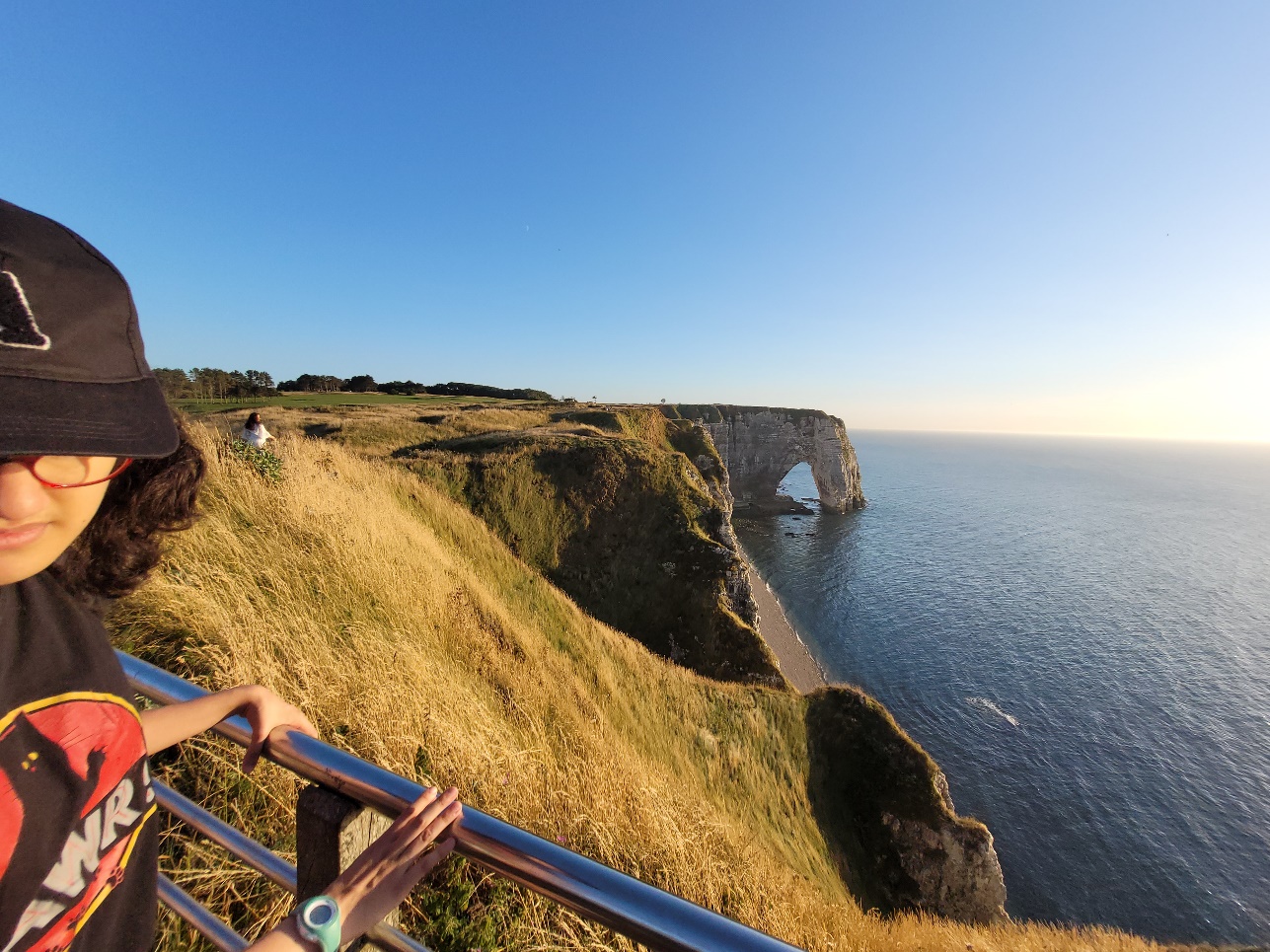
In this course, I explored world geography, focusing on the relationships among people, places, and environments that result in geographic patterns on the earth. I used a variety of interdisciplinary sources, both primary and secondary, such as maps, pictures, and documents to learn about the geography of different world regions. I have also travelled to other countries, learning about their geography in books and through travel. I’ve gained a rich understanding of global cultures and the historical factors that have shaped the world around them.
Beautiful rock formations at Etretat, France
I used the Time4Learning full course and finished the following chapters throughout a semester: Introduction to History and Geography, Physical Systems, Human Systems, Africa, The Middle East, South and Southeast Asia, Central and East Asia, Australia and Oceania, Europe, Latin America and the Caribbean, and finally The US and Canada.
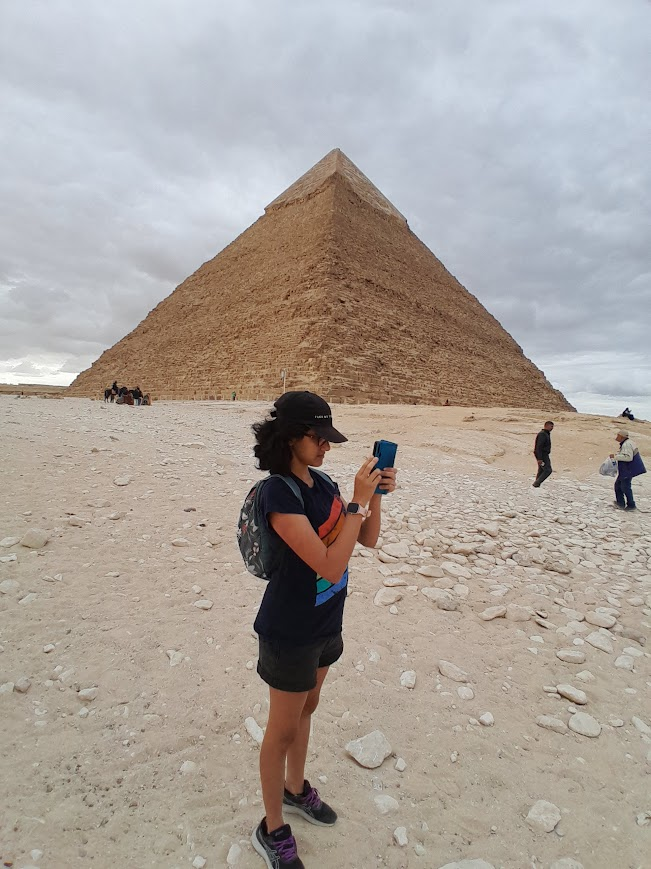
I also travelled to Egypt and Ireland and explored the different aspects that defines each of these countries, the physical and socio-cultural elements that differentiate them from their neighbors. I had read travel guides, news articles and researched Youtube videos to help me with this analysis.
The pyramid complex at the Giza plateau
Furthermore, I also purchased and read the book ‘Atlas Historique De la Terre’, the seminal work of Christian Grataloup which contains a wealth of information of all regions on Earth.
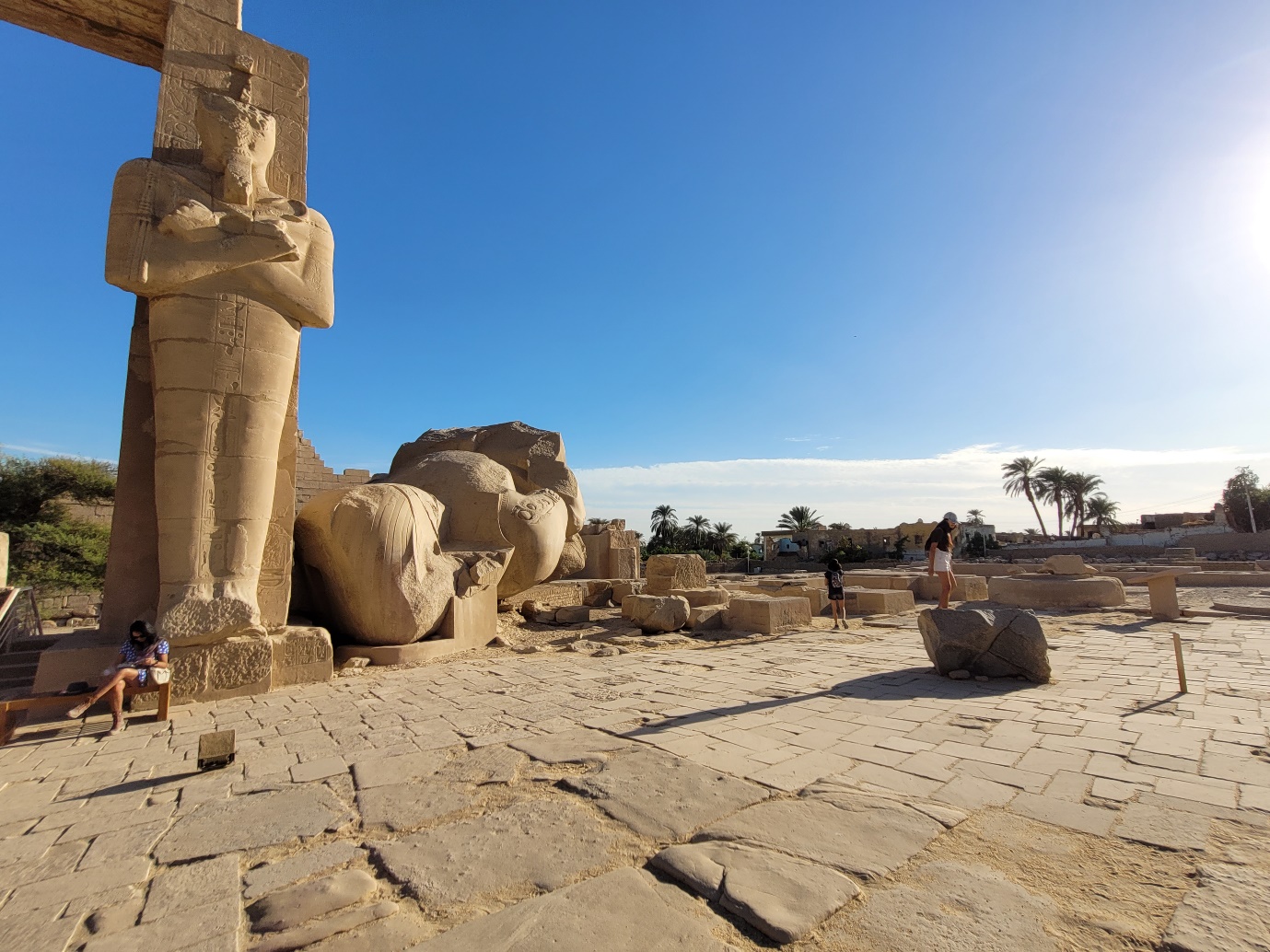
I enjoyed the international travels with my parents and sister and explored and discussed much of what we saw in Cairo, Saqqara, Dahshur and Sharm El Sheik, including the water crisis and the role of the Nile River and the repercussions of dams built in Ethiopia and Egypt (Aswan Dam) in the distribution of this precious resource. We also saw the Suez Canal from the airplane. We discussed the worldwide economic reasons for the nationalization of the Suez Canal and its role in Geopolitics, how it brought much needed wealth to Egypt, while playing a huge role in the destiny of the countries of the Fertile Crescent. We also discussed the geographic particularities of the Republic of Ireland and witnessed how very IT-centric the country is, and how it managed to build its wealth on this industry: We also saw how small and rich population the population is while being spread over Ireland’s beautiful farmland and enjoying a high standard of living, while being very close to nature.
At the Ramses II complex in Luxor, Egypt
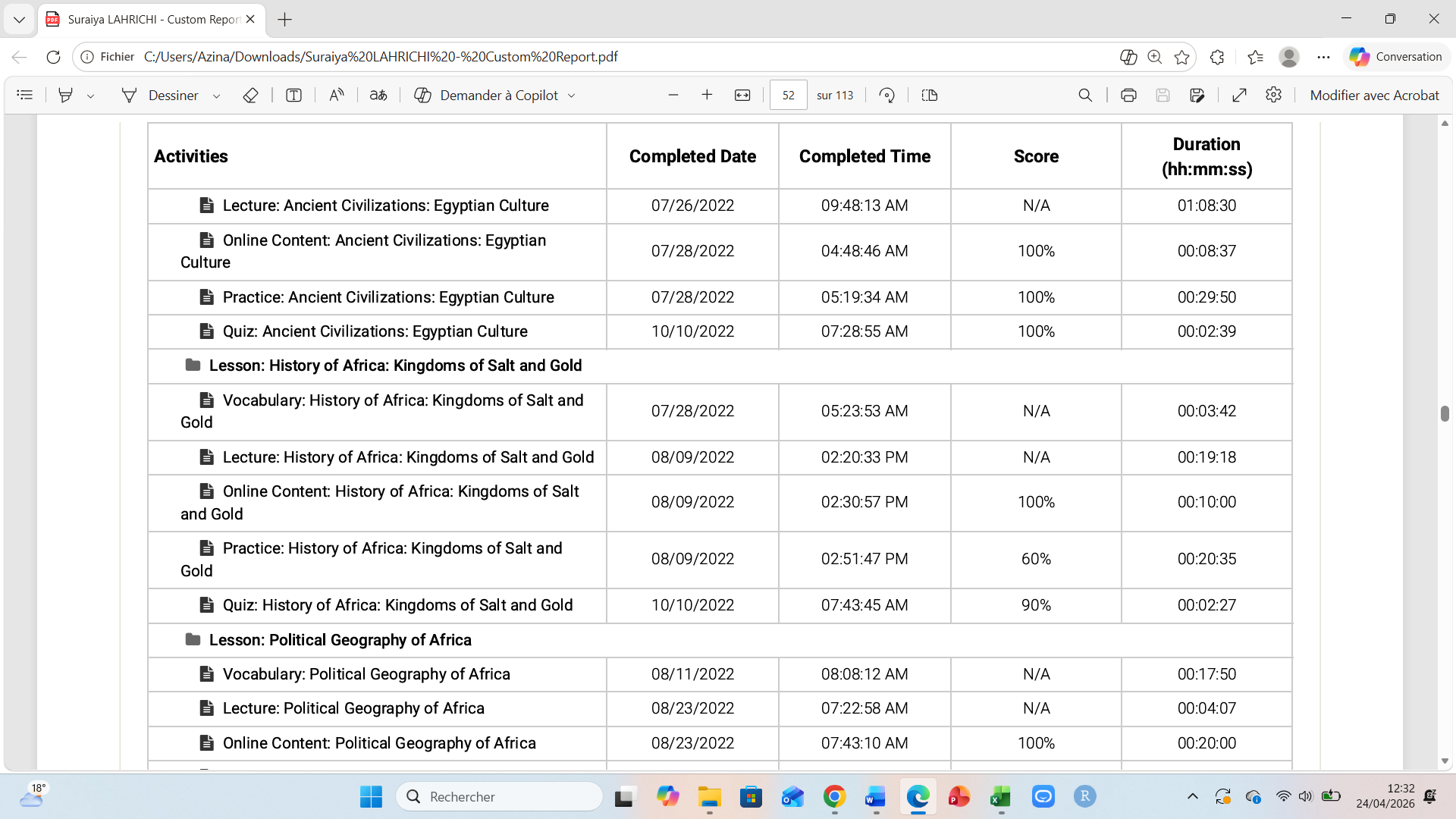
I had also been focused on one of the most pressing geographic and environmental issues of our time, climate change, and linked it with wider geographic topics such as ecosystems, human populations, and resource use. To do this, I used the Khan Academy Climate Project, which provides a structured way to study climate change in depth, including the science, impacts, and human responses. This project was a great course because it combined physical processes with real-world geographic issues. I watched the videos, read texts, took detailed notes, and completed the exercises and questions. I also worked on summarizing each section in my own words and organizing the information into clear themes: causes, mechanisms, impacts, and solutions.
Excerpt of my Edgenuity grades: